

Two days, two very different markets.
The day after the midterms, the Dow had its best day since April 2025, according to TheStreet, up about 3%.
By Thursday afternoon, as I write this, it had given it all back.
If you checked your accounts both days, you probably felt relief and then that familiar knot in your stomach, all inside about 24 hours.
Going in, JPMorgan expected the S&P 500 to move somewhere between -0.25% and +0.50% the day after the vote. The real moves were many times bigger in both directions.
Fall is my favorite time of year, and a big reason is archery season.
Most of the work happens long before I climb into a stand. I spend the summer scouting, walking the terrain and checking for sign.
One of the best predictors of a good season is history with the property. Years of watching where the deer move tell me more than any single sit ever could.
And yet, when a few evenings go by and the plan doesn't play out the way I pictured it, I start second-guessing everything.
The stand placement. The weather. How I'm walking in.
Before long I want to tear up the whole plan and start over. That's usually my patience talking.
Discipline and persistence are easy variables to let slip. They're often the ones that matter most.
When the market is going up, up and away, the plan feels great. Nobody questions their stand placement when the deer walk right under it.
Then prices start moving in uncomfortable ways, and we start questioning everything.
Maybe I have too much in stocks. Maybe I should sit in cash until things settle down.
I know that feeling well, in the woods and with my own accounts. A plan built to handle the market's ups and downs is usually the best way through them, and that only works if we stick with it.
There have been 19 midterm elections since 1950. In the 12 months after every one of them, the S&P 500 finished higher, according to Yahoo Finance's year-by-year data.
Measured from Election Day, GNG Research found the S&P 500 averaged a gain of 14.1% over the next six months and 15.1% over the next 12 months. In other years, the 12-month average was closer to 7.3%.
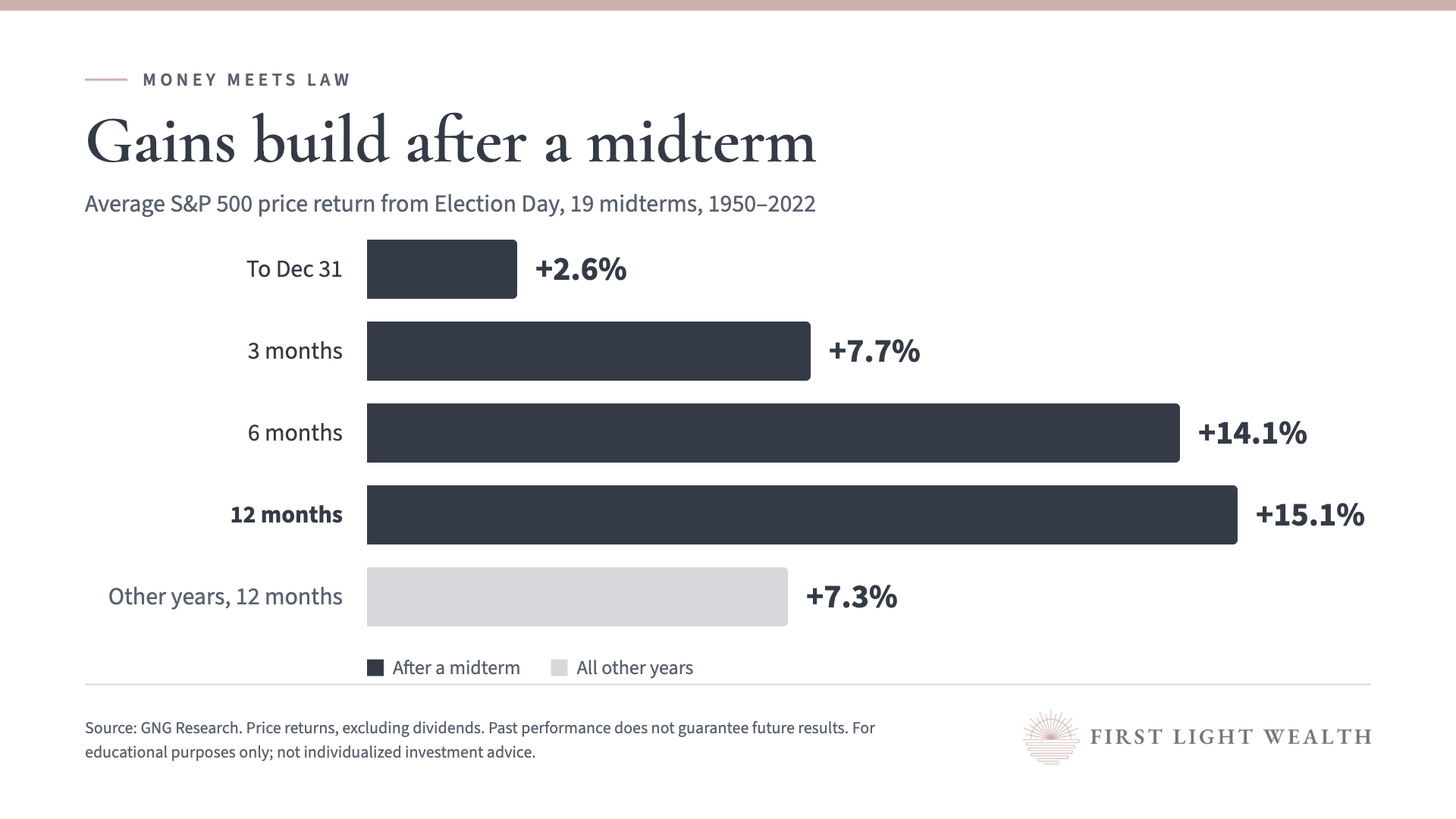
Who sat in the White House didn't change the story much. The year after a midterm averaged about 17.7% under Republican presidents (10 midterms) and 15.4% under Democratic presidents (9 midterms).
The road isn't always smooth. After the 2018 midterms, the S&P 500 fell nearly 15% by Christmas Eve. A year after the vote, it was still up about 12%.
Two honest caveats. This year the market was already up double digits heading into the election, so we started from a high. And 19 elections is a small sample to draw firm rules from.
No one has a crystal ball.
The hunters who do well over many seasons usually trust their scouting. They sit through the slow evenings and let the season play out.
A good financial plan works the same way. The scouting happens before the markets get noisy: how much you need to live on, how much sits in cash or short-term bonds for the next couple of years of withdrawals, and how much can ride out the swings.
If that work is done, a 48-hour swing after an election may be a couple of quiet evenings in the woods.
The scouting still counts.
If you're not sure your plan was built to handle a week like this one, you can Start A Conversation here and we will look at it together.
Cheers,
David
One short email a week on the money, taxes, and personal side of stepping away from the law.

Financial Advisor


Financial planning & investment management services for families & businesses
📍405 E Chocolate Ave, Suite 101 A, Hershey, PA 17033
Serving clients virtually nationwide