
.png)
There's a version of retirement most lawyers carry around in their heads.
It involves travel. A slower pace. Time with grandkids. Maybe a trip to Italy that's been on the list for fifteen years.
It's a good picture. The problem is when they plan to live it.
Most attorneys I talk to have a vague sense that retirement is "out there" — something that happens after the practice winds down, after the last client is handed off, after everything is properly tied up. Someday. Later. When the time is right.
But here's what the research actually shows about how retirees spend money over time: spending peaks in the early years of retirement and gradually declines with age. Not because people run out of money. Because they run out of energy.
Your 60s and early 70s are not a waiting room. They're the main event.
This is when you can still hike. Still travel without a list of medical accommodations. Still go somewhere adventurous and actually enjoy it rather than endure it. The version of retirement you're imagining — active, alive, fully present — that version has a window. And that window isn't your 80s.
Take a look at the following example:
Two attorneys. Same net worth going in. One retires at 65 — more travel, more spending, a life that matches what they worked for. The other stays until 75, spends less, and leaves behind a larger portfolio.
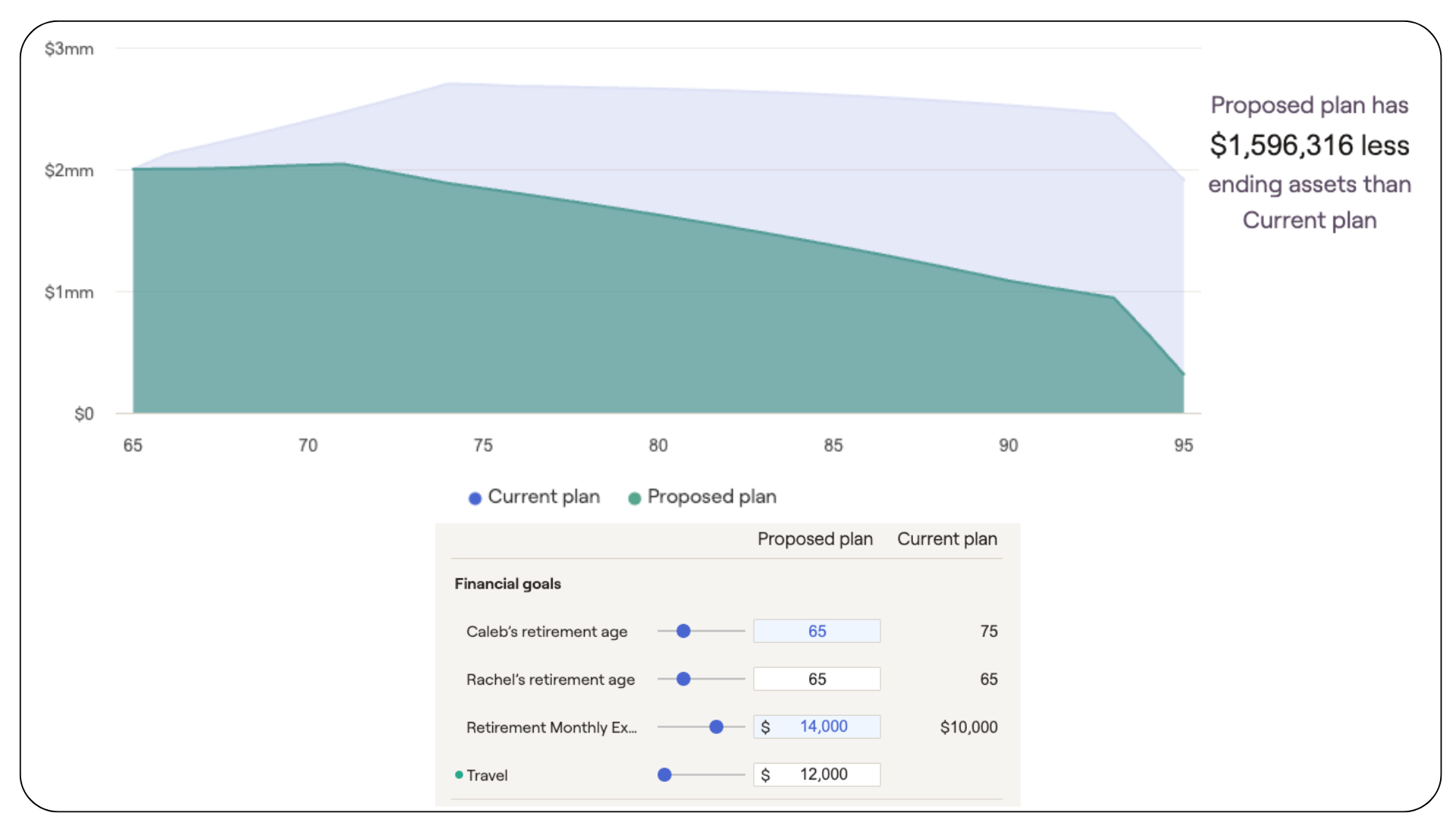
Neither is wrong. But only one of them got ten more years.
The goal of financial planning isn't to die with the biggest number. It's to make sure the money and the life are pointed in the same direction."
Some of the hesitation is fear. Fear that the money won't hold. Fear that leaving means the practice falls apart, or that decades of hard work get abandoned rather than completed.
But a lot of it is something harder to name. The law isn't just what lawyers do. For most, it's a significant part of who they are. And "retirement" — without a clear picture of what comes next — can feel less like freedom and more like erasure.
When there's no vision for the other side, staying put feels safer than stepping into the void. So they stay. Another year. Then another. Until the window gets smaller without them noticing.
I'm not saying quit tomorrow. Practice transitions take real planning — financial, operational, psychological. Done well, they take time.
But the planning needs to start with an honest question: what exactly are you waiting for?
If the answer is "enough money" — let's look at the numbers together. That's a solvable problem.
If the answer is "I don't know what I'd do with myself" — that's the one worth sitting with. Because no amount of financial planning solves an identity question.
The Italy trip doesn't get better the longer you wait. Neither do you.

Financial Advisor


Financial planning & investment management services for families & businesses
📍405 E Chocolate Ave, Suite 101 A, Hershey, PA 17033
Serving clients virtually nationwide